Texas Window Tint Laws
By Pierce | Skrabanek
Published on:
December 16, 2025
Updated on:
June 25, 2026

.avif)
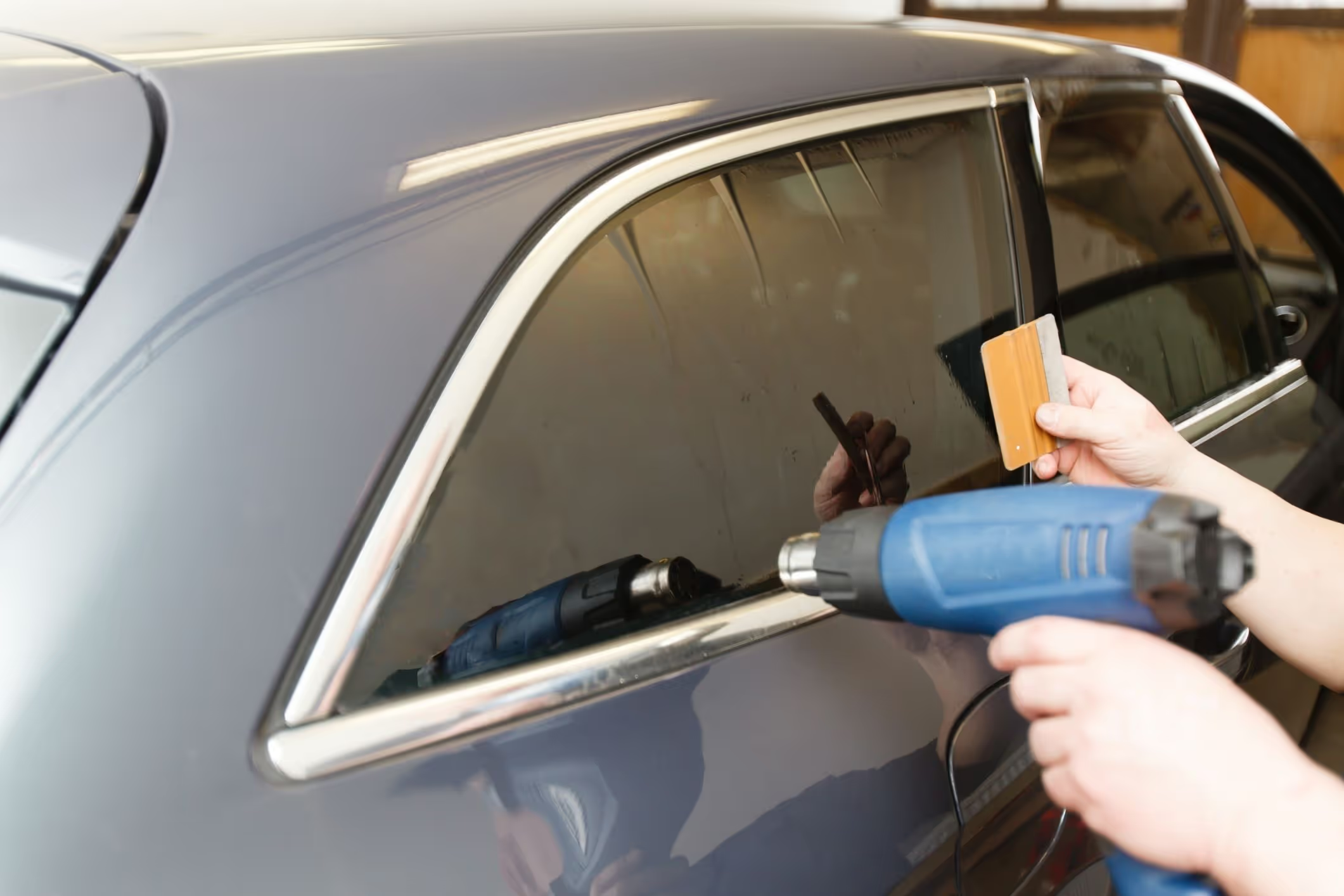
Whether you're looking to reduce glare from the intense Texas sun, protect your vehicle's interior, or add some privacy while driving, window tinting is a popular modification for Texas motorists.
However, before you schedule that tinting appointment, it's crucial to understand the state's window tint regulations to avoid costly violations and ensure your vehicle remains street legal.
Here’s what you need to know about Texas window tint law.
Excessively dark window tint can impair a driver's visibility and contribute to serious accidents. If you suffered injuries in a collision, contact Pierce Skrabanek today at (832) 690-7000. Our experienced car accident attorneys can help you pursue the compensation you deserve.
Can You Tint Your Windshield in Texas?
Yes, but only partially. Texas law restricts windshield tinting to the top portion only, in one of two configurations:
- Above the manufacturer's AS-1 line (a marking typically found on most windshields), and
- The top 5 inches of the windshield if no AS-1 line is present.
Any tint applied to this area must have a VLT (Visible Light Transmission) of 25% or higher, meaning it must allow at least 25% of light to pass through. Windshield tint also cannot exceed 25% reflectivity. A clear, non-tinted UV protection film can be applied anywhere on the windshield without requiring a medical exemption.
What Is the Legal Window Tint in Texas?
Texas enacted comprehensive window tinting regulations back in 2009 that establish different requirements depending on which windows you're tinting. Unlike some states that distinguish between sedans and SUVs, the same rules apply to all passenger vehicles, including cars, trucks, vans, and SUVs.
Front Side Windows
The front side windows must allow more than 25% of light to pass through. This requirement ensures that drivers maintain adequate visibility while also allowing law enforcement to see into the vehicle when necessary. These windows also cannot be more than 25% reflective.
Rear Side Windows and Back Window
Texas window tint law provides considerably more flexibility for rear windows. These can be tinted to any level of darkness you prefer, with no minimum VLT requirement.
However, if your rear window is tinted to any degree, your vehicle must be equipped with dual side mirrors that provide at least 200 feet of visibility behind the vehicle. Without these dual mirrors, your rear window must maintain a minimum VLT of 25%. Like all other windows, rear windows cannot exceed 25% reflectivity.
What Does VLT Mean for Window Tint?
As mentioned above, VLT stands for Visible Light Transmission. This percentage indicates how much visible light passes through your window tint combined with the original glass. The lower the VLT percentage, the darker the tint appears.
For example, a window with 70% VLT allows 70% of visible light to pass through, creating a relatively light tint. Conversely, a 5% VLT tint blocks 95% of visible light, resulting in a very dark appearance that significantly limits visibility from outside the vehicle.
Law enforcement officers use specialized meters to measure these percentages during traffic stops, and your tint must meet specific legal requirements regardless of how it appears to the naked eye.
What Other Window Tint Laws Should Texas Drivers Know?
Color Restrictions
Texas prohibits red, blue, and amber tints on any vehicle windows. These restrictions help prevent confusion with emergency vehicle lighting.
Certification and Identification Requirements
Manufacturers of window tinting film must certify that their products comply with state regulations. When having your windows tinted, ensure your installer uses certified film from a reputable manufacturer.
Additionally, a sticker identifying the tint film's installer and manufacturer must be placed between the film and glass on the driver's side window. According to the Texas Administrative Code, only one label needs to be attached to the rearmost, bottom corner of the driver's side window. This sticker serves as proof of compliance during vehicle inspections and traffic stops.
Vehicles Exempt from Texas Window Tint Laws
Certain vehicles are exempt from window tint regulations, including law enforcement vehicles used for official purposes and passenger transport vehicles operated for a fee, such as taxis, limousines, and buses.
Illegal window tint can be a contributing factor in serious accidents. When drivers can't see clearly due to overly dark tint, they may fail to notice pedestrians, cyclists, or other vehicles.
If a negligent driver has injured you or a loved one, Pierce Skrabanek is here to fight for your rights. Schedule a free case review or call us at (832) 690-7000.
Can You Get a Medical Exemption for Darker Tint in Texas?
Texas window tint law recognizes that some individuals have legitimate medical conditions that make them particularly sensitive to sunlight and UV radiation. Qualifying conditions include lupus, albinism, photosensitivity disorders, certain skin conditions or skin cancer, and xeroderma pigmentosum.
To qualify for a medical exemption, you must obtain a signed statement from a licensed physician or optometrist that identifies the driver or occupant and states that darker window tinting is necessary to safeguard their health.
The Texas Department of Public Safety no longer issues Window Tint Exemption Certificates. Instead, motorists must carry the signed medical statement in their vehicle at all times and present it to law enforcement during traffic stops and to inspection stations during annual vehicle inspections.
What Happens If You Get Caught with Illegal Window Tint in Texas?
Violating window tint regulations can result in various penalties depending on the circumstances. For a first-time violation, fines typically range from $20 to $200, depending on the jurisdiction. Repeat offenses carry fines of $275 or more, plus additional court costs.
In some cases, law enforcement may issue a "fix-it ticket," requiring you to remove or adjust the illegal tint to meet legal standards. You must then show proof of compliance to have the citation dismissed or reduced.
Vehicles with illegal window tint may also fail their annual safety inspection, which is required for vehicle registration. This can create additional legal issues, as driving with an expired registration results in further citations.
How Can You Stay Compliant with Texas Window Tint Law?
To ensure you remain compliant with Texas window tint regulations:
- Choose a reputable installer who knows the regulations and uses certified materials;
- Request proper documentation, including the required certification sticker and VLT percentage information;
- Balance aesthetics with safety since excessively dark tints can reduce visibility, particularly at night;
- Keep medical documentation accessible if you have a medical exemption;
- Remember how VLT is measured because it's the combination of your window glass and applied tint film, not just the film alone; and
- When in doubt, go lighter to ensure compliance.
Injured in a Car Accident?
At Pierce Skrabanek, we know that car accidents can happen for many reasons, and sometimes illegal vehicle modifications, such as excessively dark window tint, can contribute to collisions.
When a driver's illegal window tint contributes to reduced visibility and leads to an accident that injures you or a loved one, that driver should be held accountable.
With over 30 years of experience, our car accident attorneys have successfully represented countless victims throughout Texas, recovering hundreds of millions for our clients.
Whether you're dealing with medical bills, lost wages, pain and suffering, or long-term disability after a serious car accident, we're here to help you recover every dollar you deserve. Contact us today at (832) 690-7000.
Proudly Representing Texas Residents

Pierce Skrabanek Fights for Results
We fight for the legal rights of clients nationwide in a broad range of areas, including maritime, industrial, and car or trucking accidents.
All Practice Areas