What to Do After a Truck Accident in Texas
We are dedicated to helping those who have been injured or affected by a catastrophic injury. You may contact us 24/7 at (832) 690-7000 for a free, confidential consultation or to schedule an appointment with us.
Hurt in a Texas truck accident? Here's what to do next.


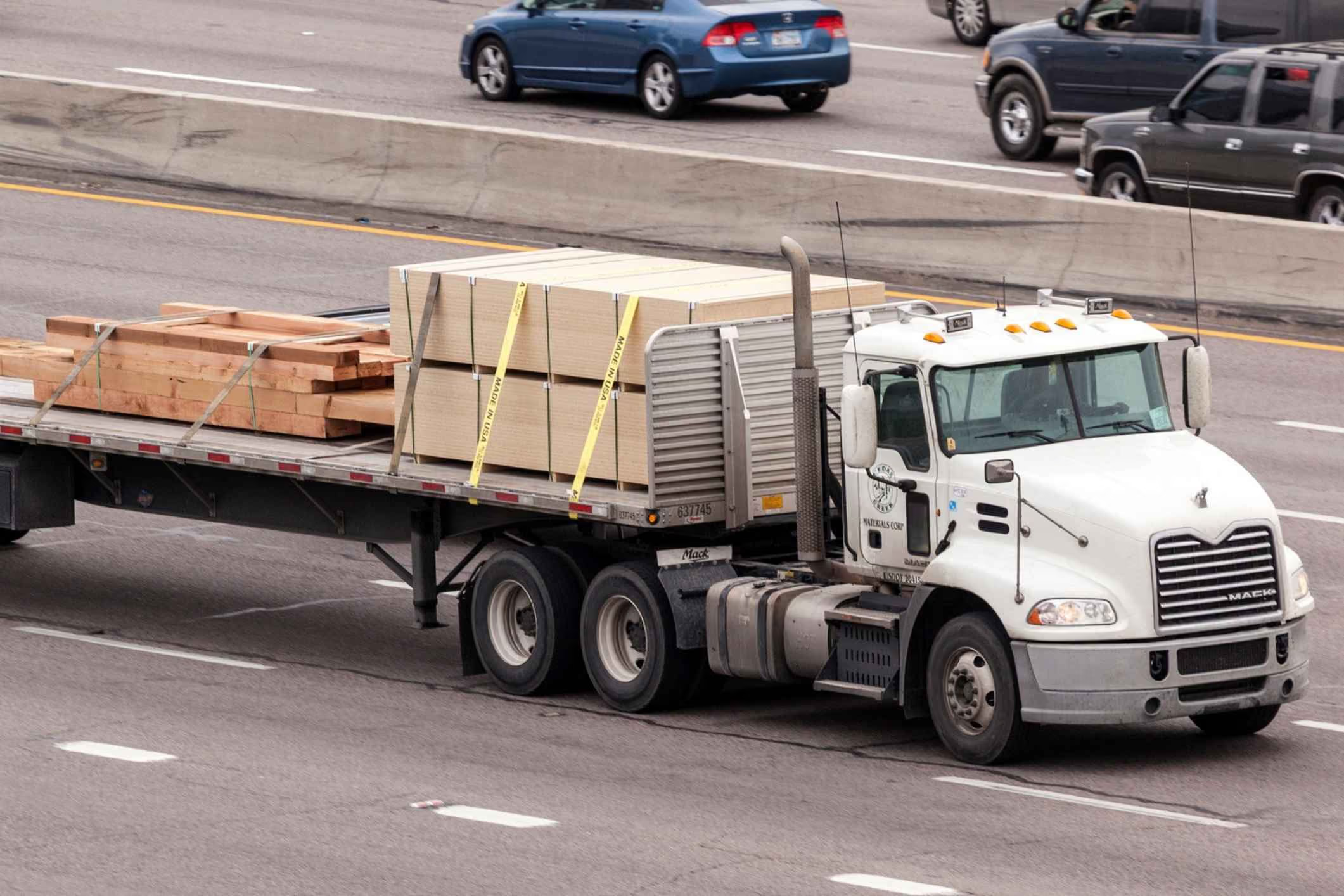


The moments following a serious truck accident in Texas are often frightening, stressful and hectic. It’s normal not to be thinking clearly. However, if possible, there are several things you can do that may make your recovery much easier down the road. It helps to know ahead of time what to do after a truck accident.
Of course, your safety and well-being are top priorities. Be sure to seek immediate medical attention first if you or your passengers are injured after a truck accident. If you leave the scene by ambulance or are too injured to collect information, a passenger or family member may be able to gather some of it for you.
A Texas truck accident attorney can also obtain evidence and records you were unable to collect yourself. Pierce Skrabanek represents people seriously injured in truck accidents throughout Texas.
If you have questions about what to do next, call (832) 690-7000 or contact us online for a free consultation.
Steps to Take After a Truck Accident
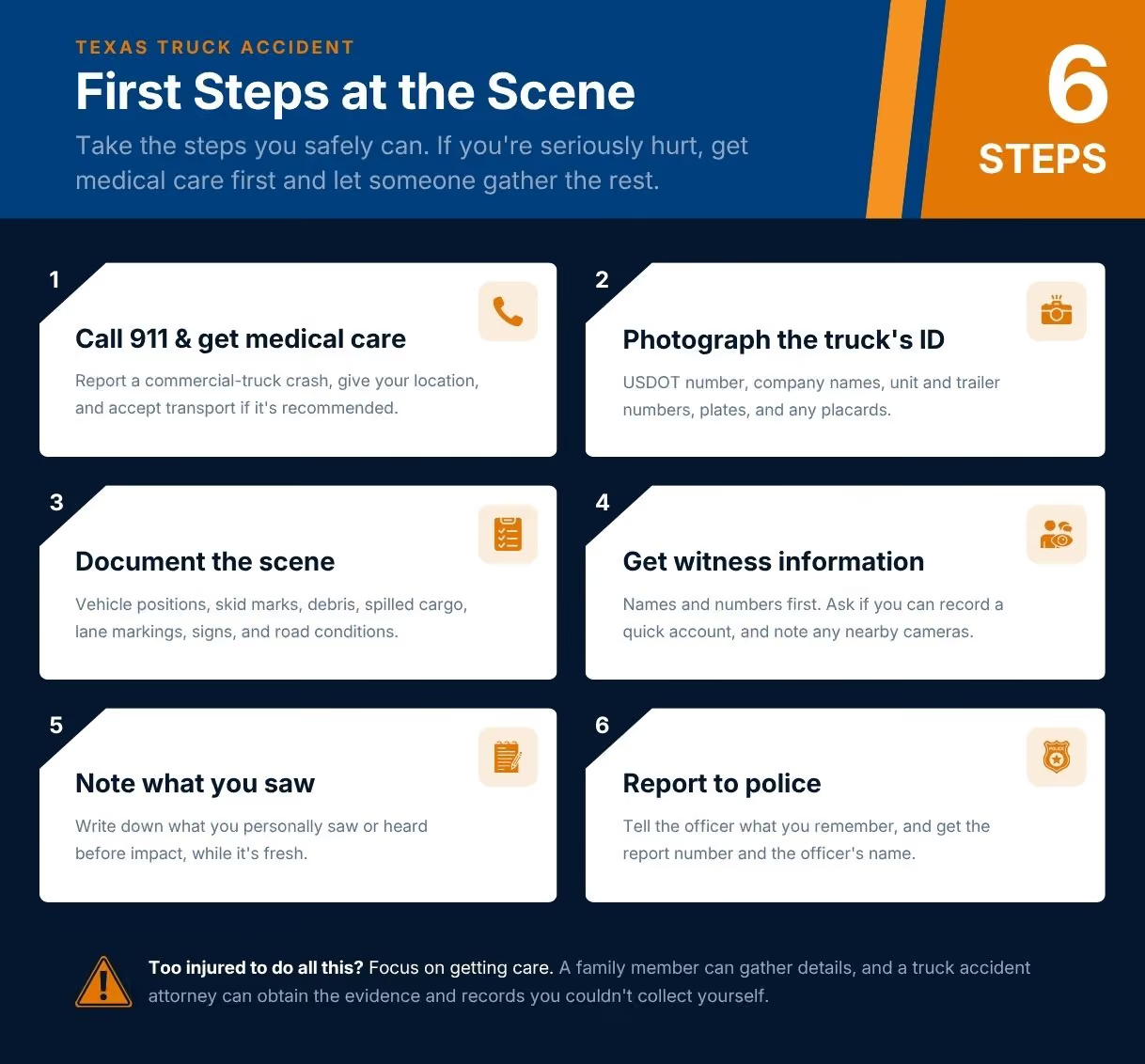
Use this checklist as a guide after a Texas truck accident. Take the steps you safely can at the scene. If you are seriously injured, focus on getting medical care. A passenger or family member may be able to gather some information for you, and an attorney can obtain evidence and records you were unable to collect yourself.
1. Call 911 and Seek Medical Attention
Call 911 and tell the dispatcher that you have been involved in a collision with a commercial truck. Give your location as precisely as you can. On a Texas interstate or rural highway, the nearest exit, mile marker, cross street, or direction of travel can help first responders find you.
Let the dispatcher know if anyone is trapped, unconscious, bleeding heavily, having difficulty breathing, or unable to move. Mention spilled cargo, fire, or a hazardous-material placard if you see one, and keep your distance.
While waiting for emergency responders:
- Move away from active traffic if you can do so safely. Truck crashes can leave vehicles, debris, cargo, and fluids across several lanes.
- Do not move someone who appears seriously injured unless remaining where they are creates an immediate danger.
- Tell paramedics about your symptoms, including headache, dizziness, confusion, abdominal pain, numbness, breathing problems, or neck and back pain.
- Tell them if you hit your head or cannot remember part of the crash.
- Accept transport if emergency personnel recommend it. Someone else can help gather information from the scene, and your attorney can investigate what could not be collected.
If you leave by ambulance, you may not know where your vehicle was towed, which company owns the truck, or whether witnesses stayed. Those details can be tracked down afterward.
2. Get Information About the Truck and Trucking Company
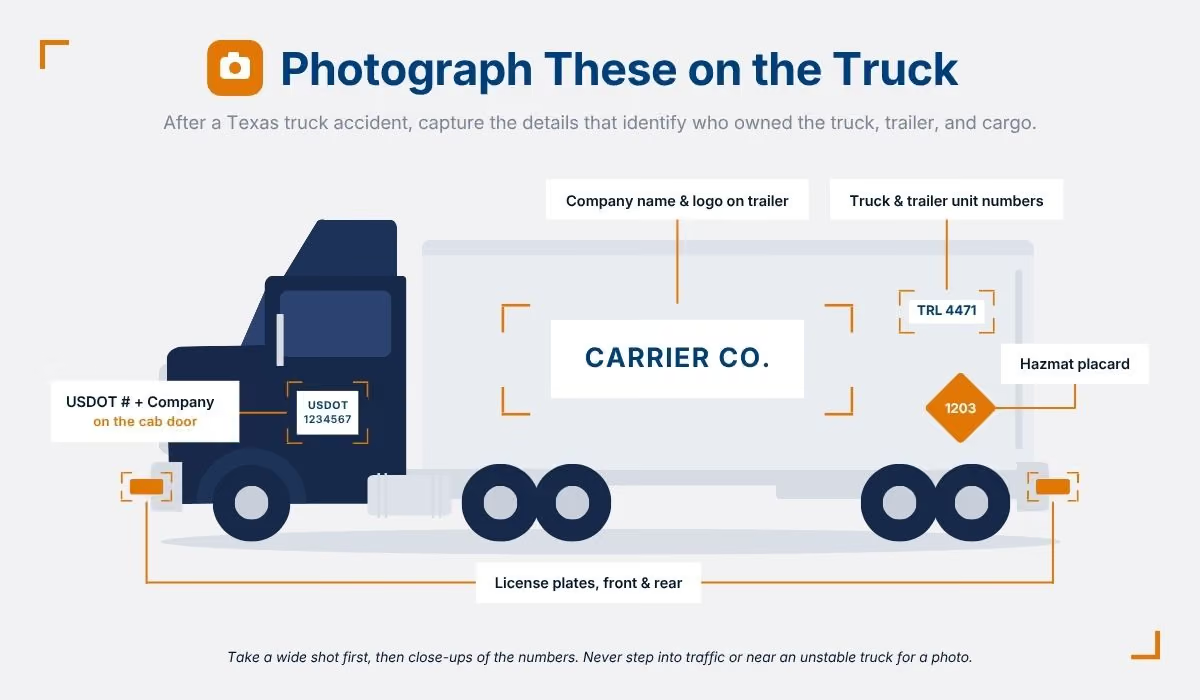
A commercial truck can display several identifying numbers and company names. If you can safely gather information, use your phone to photograph it instead of trying to copy everything down. An uninjured passenger or family member at the scene can also take the photos for you.
Look for and photograph:
- The front, back, and sides of the tractor and trailer;
- The trucking company name and USDOT number;
- Truck or unit numbers;
- Trailer numbers;
- License plates;
- Logos or company names on the trailer; and
- Any hazardous-material placards.
Take a wider photo first and then a close-up of identifying numbers or names.
Pay attention if the company name on the tractor differs from the name on the trailer. The tractor, trailer, cargo, and driver can be connected to different businesses. Those details can help an attorney determine which companies were involved.
Do not walk into traffic or around a damaged or unstable truck to get a photograph. Missing information can often be obtained later through the police report and investigation.
3. Take Photos and Video of the Accident Scene
Vehicle damage is only part of what your photos should capture. The position of the vehicles, roadway, debris, and other details can provide information about how the collision happened.
If you can safely take pictures, start wide and then move closer. First photograph the truck, your vehicle, and the roadway together. Then capture:
- Where the vehicles came to rest. Include both vehicles in the same frame when possible.
- The roadway approaching the crash. Include curves, hills, merging lanes, or construction zones.
- Lane markings. These can be especially useful after a sideswipe or disputed lane change.
- Tire or skid marks and debris. Photograph where they are located before the roadway is cleared.
- Cargo. Document spilled cargo, an open or damaged trailer, broken restraints, or visibly shifted freight.
- Traffic controls. Photograph traffic lights and signs from the vehicles' direction of travel when possible.
- Vehicle damage. Get wide shots and closer photos of the areas where the vehicles appear to have made contact.
- Road and weather conditions. Include standing water, construction barriers, damaged pavement, or other relevant conditions.
You can also take a short video from a safe location. Slowly show the roadway, traffic flow, vehicle positions, and surrounding area.
Avoid narrating what you believe caused the accident. Use the photos and video to document what is physically there.
4. Get Witness Information and Ask If You Can Record What They Saw
Witnesses may leave before police have a chance to speak with them. If someone says they saw the accident, get their name and phone number first.
If they have a minute, ask:
“Would you mind if I record you on my phone telling me what you saw?”
Texas generally permits a person participating in a conversation to record it. Asking first also makes it clear that you are recording.
Let the witness explain what happened in their own words. Simple questions such as “Where were you?”, “What did you see?”, and “Did you notice anything about the truck before the collision?” are enough.
If they do not want to be recorded, get their contact information and make a short note:
Witness: Mark, 214-555-XXXX. Driving blue pickup behind me in right lane. Said he saw truck start coming into my lane before impact. Spoke with DPS officer.
Also note nearby businesses or vehicles that may have cameras. A simple entry such as “Shell station on northeast corner, cameras appear to face intersection” gives your attorney a specific place to follow up for possible footage.
5. Write Down What You Remember About the Truck Before the Crash
When you are able, make a note in your phone or send yourself an email about what you remember from the minutes before the collision.
Focus on what you personally saw, heard, or felt. That could include the trailer swaying, the truck crossing lane markings, smoke near a wheel, cargo moving, sudden braking, or unusual driving before the crash.
Your note does not need to sound formal:
I-35 northbound, around 4:30 p.m. I was in middle lane. Red semi was to my left. Trailer started moving toward my lane. I hit brakes and horn. Truck kept coming over. Impact was on driver's side of my car. I don't remember whether truck had its turn signal on.
Stick to what you remember rather than trying to determine why it happened. If you heard a loud pop, write that down. If you saw tire debris, record what you saw. An attorney can later investigate whether a mechanical problem, driver conduct, cargo issue, or something else contributed to the crash.
6. Report the Truck Accident to Police
A serious truck accident should be reported to law enforcement. Depending on where the collision occurs in Texas, a local police department, sheriff's office, or the Texas Department of Public Safety may respond.
Tell the investigating officer what you actually remember. If the truck moved into your lane, say so. If you saw cargo fall from the trailer, describe it. If you cannot remember the seconds immediately before impact, say that rather than trying to fill in the missing details.
If possible, get the police report number and the officer's name. If you are transported before you can do that, a family member or your attorney can determine which agency investigated the crash and obtain the report later.
Seriously Injured in a Texas Truck Accident?
You may have left the scene without the truck driver’s information, witness names, photos, or any idea what happens next. Pierce Skrabanek can help track down the information you missed, preserve evidence from the trucking company, and handle the insurance calls while you focus on your recovery.
Call (832) 690-7000 to speak with a Texas truck accident attorney about your next steps.
7. Notify Your Insurer, but Be Careful With Recorded Statements
Notify your insurance company promptly and provide the basic information needed to report the collision. A commercial truck accident may involve several businesses and insurers, so keep track of who contacts you and whom they represent.
If another adjuster calls, ask for their name, company, phone number, claim number, and the person or business they represent before discussing the crash in detail.
This becomes especially important when you are figuring out what to do after a semi-truck accident because an adjuster may ask for a recorded statement before you have seen the police report, received a complete diagnosis, or learned what other evidence exists.
Suppose an 18-wheeler changes lanes into your vehicle on I-10 and you leave by ambulance. The next day, an adjuster asks:
“When did you first see the truck moving into your lane?”
You remember the impact but cannot confidently reconstruct the seconds before it. Guessing gives the insurer an answer that can later be compared with dashcam footage, witness statements, or electronic data.
Be especially careful with questions such as:
- “How fast were you going?” You may not know your exact speed.
- “Could you have moved onto the shoulder?” Your response could later become part of a dispute over whether you could have avoided the crash.
- “How are you feeling now?” Your injuries may still be under evaluation, and some symptoms can change after the accident.
If you do not know or remember something, do not guess. Before giving a recorded statement to an insurer representing the truck driver, trucking company, or another party, speak with a truck accident attorney.
8. Find Out Where Your Vehicle Was Towed
If you left by ambulance, contact the investigating law enforcement agency to find out which towing company removed your vehicle. A family member can make the call if you are hospitalized or recovering.
Your vehicle may contain evidence about the collision. Before authorizing it to be destroyed, salvaged, or disposed of, speak with your attorney about whether it needs to be preserved or inspected.
9. Contact a Truck Accident Attorney Before Important Evidence Is Lost
The trucking company may begin investigating while you are still receiving medical treatment. The truck can be repaired and returned to service, video may be overwritten, and witnesses can become harder to locate.
A truck accident attorney can determine which evidence needs to be preserved based on how the crash occurred. If your injuries prevented you from gathering information yourself, an attorney can also obtain the police report, identify the motor carrier, follow up with witnesses, and investigate records held by the trucking company.
The Days After the Truck Accident
Once you are home from the hospital or emergency room, there are still a few things you can do to protect your health and keep important information organized.
Continue Your Medical Care
Keep follow-up appointments and let your medical provider know about new or worsening symptoms. Some truck accident injuries require additional testing, specialist care, physical therapy, or other treatment after the initial emergency room visit.
Keep copies of:
- Hospital discharge instructions;
- Medical bills and records;
- Imaging and test results;
- Prescription information;
- Referrals to specialists;
- Physical therapy records; and
- Written work or activity restrictions.
If your doctor limits lifting, driving, sitting, standing, or working, ask for those restrictions in writing. Keep records of days you miss from work because of your injuries, appointments, or treatment.
Keep Your Truck Accident Records in One Place
A serious truck accident can quickly generate paperwork from medical providers, insurers, law enforcement, your employer, and the towing company. Create one folder on your phone or computer for everything related to the crash.
Save:
- Photos and videos;
- Witness information;
- The police report number and report;
- Medical bills and records;
- Insurance correspondence;
- Repair or total-loss documents;
- Accident-related receipts;
- Work restrictions; and
- Records showing missed work or lost income.
Keep original photos and videos when possible. If someone sends you footage of the crash, save the original file along with the person's contact information.
Be Careful About Social Media After a Truck Accident
Insurance companies may review publicly available social media when evaluating an injury claim. A photograph or video can leave out important context about what you were physically able to do and how you felt afterward.
Suppose you attend your daughter's birthday two weeks after the crash. You stay for an hour, spend most of the time sitting, and leave early because your back hurts. Someone posts a photo of you smiling next to the birthday cake.
The photograph does not show the medication you took beforehand, the activities you could not participate in, or the pain you experienced later.
After a serious truck accident:
- Be cautious about posting photos or videos of outings, travel, exercise, or physical activities.
- Avoid posting details about the collision or your injuries.
- Ask friends and family to be careful about tagging you.
- Speak with your attorney before deleting existing posts related to the accident or your injuries.
How Can a Texas Truck Accident Lawyer Help Me?
The information you gathered at the scene can give your attorney a starting point for a larger investigation.
A photograph of the truck's USDOT number can help identify the motor carrier. A witness's phone number gives the legal team someone to contact about what they saw. A note about a camera at a nearby gas station or business identifies potential footage that can be requested.
Pierce Skrabanek can also investigate evidence held by the trucking company or other businesses involved in the trip, including:
- The truck driver's history and qualifications;
- Electronic logging device records;
- GPS and electronic truck data;
- Dispatch communications;
- Dashcam or onboard video;
- Inspection and maintenance records;
- Cargo and loading records; and
- Prior accidents or safety violations.
Which records matter depends on how the crash happened. If a trailer repeatedly crossed the lane line before hitting you, driver logs, electronic data, video, and dispatch records may provide more information about what was happening before impact. If you saw tire debris before the truck lost control, maintenance records and an inspection of the truck may become more important.
Our attorneys can preserve evidence, investigate the people and companies involved, and handle communications with insurers while you continue your medical treatment.
Compensation if You’ve Been Involved in a Truck Accident
A serious truck accident can result in medical expenses, time away from work, and injuries that continue affecting you well after the collision.
Pierce Skrabanek can seek compensation for:
- Ambulance transportation and hospital care;
- Surgery and follow-up medical treatment;
- Physical rehabilitation and necessary assistive equipment;
- Lost income while you are unable to work;
- Reduced future earning capacity if your injuries affect your ability to work; and
- Pain and suffering.
The amount of compensation available depends on your injuries, financial losses, insurance coverage, the parties responsible for the crash, and other facts of your case.
Proudly Representing Texas Residents

Pierce Skrabanek Fights for Results
We fight for the legal rights of clients nationwide in a broad range of areas:
Our Testimonials

“Every person I came in communication with was a great person. This law firm treats you as family and will do anything to get the best for you.”
Andres T.
“Mr. Skrabanek and his team are all very diligent, thorough, and hard-working. For my first time ever needing a lawyer, I had a great experience. They walked me through the process and answered all of my questions along the way and in a timely manner. I greatly appreciate all of their help!”
Tori P.
“They took care of me from start to finish! I’m very pleased with my results. I will 100% recommend it to my friend's family or just another person who needs good help in a bad situation. Thank you to Paul and the whole team!”
Jon J.
Get Free Consultation
Fill Out Our Form For Your Free Consultation
Get in Touch With a Texas Truck Accident Lawyer
Understanding what to do after a truck accident can help you avoid losing information that may become important later. When serious injuries prevent you from handling everything yourself, Pierce Skrabanek can step in to investigate the crash and deal with the companies and insurers involved.
Our reputation for success has garnered several awards, including induction into the Multi-Million Dollar Advocates Forum, Million Dollar Advocates Forum, and Super Lawyers by Texas Monthly Magazine.
Call (832) 690-7000 or contact us today if you or a loved one has been injured in a Texas truck accident. Your consultation is free and without obligation.
What Our Clients Are Saying About Us
Frequently Asked Questions
Frequently Asked Questions
What causes truck accidents in Texas?
Truck accidents can involve distracted or fatigued driving, speeding, impairment, inadequate training, mechanical problems, or improperly loaded cargo. The cause may require investigation because evidence such as driver records, electronic truck data, maintenance records, and witness accounts can reveal information that was not apparent at the scene.
What if I was too injured to collect information at the scene?
Being transported to the hospital does not prevent you from pursuing a claim. A family member can help obtain the crash report and locate your vehicle, while your attorney can identify the trucking company, contact witnesses, obtain available video, and pursue records you could not collect yourself.
Tell your attorney anything you remember about the truck or collision, even if it seems minor.
Are expert witnesses necessary in truck accident cases?
Some cases require experts, depending on what is disputed. An accident reconstruction expert may analyze how the collision occurred, while trucking or mechanical experts may evaluate brakes, tires, maintenance, or cargo issues. Medical or economic experts may also be used when injuries create long-term treatment needs or affect future earnings.
Do most truck accident cases go to trial?
Many truck accident claims settle without trial. A lawsuit may become necessary when responsibility is disputed or the insurer will not offer compensation that fairly accounts for serious injuries and losses.
Pierce Skrabanek can negotiate with the companies and insurers involved and prepare the case for trial when necessary. Call (832) 690-7000 for a free consultation.
We’re Here for You:
Real Results for Real Challenges
We know how tough things can get after an injury. That’s why we make your struggles our fight. With over three decades of combined experience, we’ve been the reliable allies our clients need, tackling financial hardships, physical pain, and major life changes. Our track record of successful verdicts and settlements speaks to our team’s passion and dedication to helping clients get the support and justice they need.
$2 Million Settlement for 18-Wheeler Driver
Summary: Paul obtained a $2 million settlement for an 18-wheeler driver who was rear-ended by another 18-wheeler driver in Louisiana. The claims were against the Defendant’s 18-wheeler driver as well as the company that employed him. The Plaintiff underwent two surgeries as a result of the collision. The case settled after numerous depositions to the satisfaction of the client.
$565,000 Settlement for 18 Wheeler Victim
Summary: Paul obtained a $565,000 settlement on behalf of a 62-year-old woman who was involved in a collision with an 18-wheeler in December 2010. The case was settled out of court at a second mediation the week before trial. The client filed suit against the truck driver and the trucking company in Dallas County, alleging that the truck driver ran a stop sign and caused a collision with her truck. The defendants alleged that the client was in the best position to avoid the collision simply by going around the truck. Ultimately, the client suffered a back injury that required surgery. The defendants contended that the 62-year-old's condition was related to a prior incident in 2007, when medical records showed herniations in her lower back and neck. After the first mediation, the mediator issued a proposal that both parties rejected. However, at a second mediation the week before trial, the defendants and their insurance carrier agreed to pay more than the amount proposed during the first mediation. Paul was the lead attorney on the case.


