Can a Car Crash Cause Temporary Blindness?
By Pierce | Skrabanek
Published on:
February 6, 2026
Updated on:
April 21, 2026

.avif)
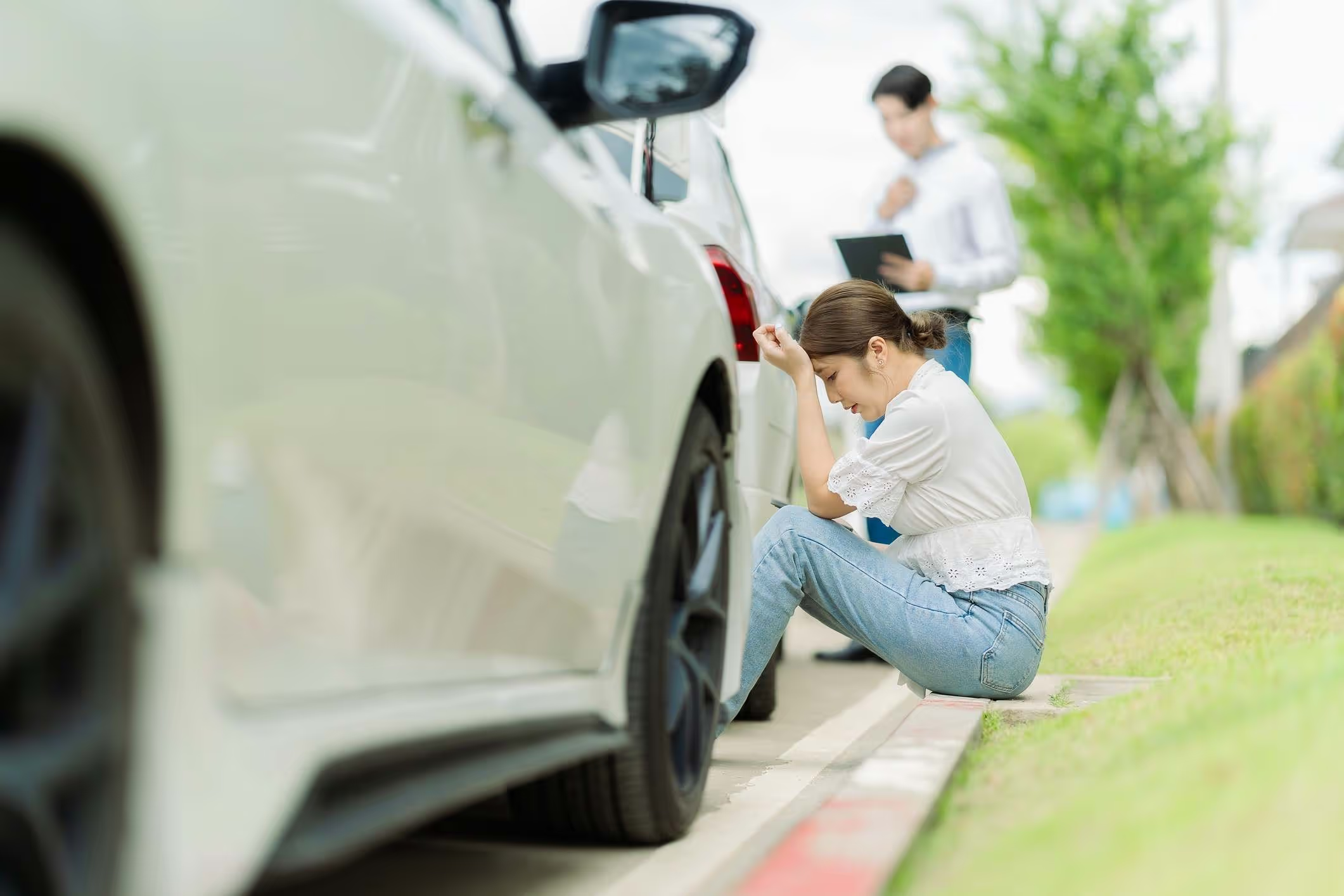
Most people walk away from crashes worried about their car, their neck, maybe a few bruises. Vision problems don't even cross their minds until the blur won’t clear, the headache won’t stop, or one eye has gone dark.
So, can a car crash cause temporary blindness? Yes. The force of a collision can damage the eyes, optic nerves, or the brain areas that control vision.
Here’s what you should know if a crash affected your vision.
If you are experiencing vision changes after a crash that was not your fault, contact Pierce Skrabanek to discuss your legal options with a car accident attorney. Call (832) 690-7000 for a free case review.
How Car Accidents Can Cause Temporary Blindness
The force of a crash can damage your vision in several ways.
Airbag Deployment
Airbags save lives, but they deploy at speeds up to 200 mph. That explosive force can strike your face and eyes directly, causing:
- Chemical burns from the powdery substances used to inflate the bag,
- Corneal abrasions when debris or the fabric itself scrapes across your eye, or
- Blunt trauma that bruises the eye or surrounding structures.
Whiplash and Neck Injuries
The violent back-and-forth motion that defines whiplash doesn't just affect your neck. The sudden jerking movement can:
- Strain the nerves that control eye movement and focus,
- Disrupt blood flow to the optic nerve temporarily, or
- Cause muscle spasms that affect your ability to move or align your eyes properly.
Head Trauma and Concussion
Your brain processes what you see in the occipital lobe at the back of your skull. When your head strikes a window, steering wheel, or headrest during impact, the resulting concussion can:
- Scramble visual signals even without direct eye injury,
- Create blind spots or blurriness in parts of your visual field, or
- Cause complete vision loss in certain areas.
Psychological Shock
In rare cases, the extreme stress of a car accident can trigger a condition known as psychogenic blindness. This occurs when:
- The eyes function normally, but the brain temporarily blocks visual information, or
- Trauma overwhelms the brain’s ability to process sensory input.
With proper psychological treatment, vision often returns as the underlying stress is addressed.
Types of Temporary Vision Loss After a Crash
There are different types of temporary vision loss you can experience after a car crash. Some of the most common ones include:
Blurry or Double Vision
Blurry vision after a car accident often stems from a concussion, while double vision means the eye muscles aren't coordinating properly. Both can result from head trauma, whiplash, or direct eye injury. These symptoms may clear up quickly or signal more serious damage.
Amaurosis Fugax (Transient Blindness)
This condition causes sudden, temporary blindness in one eye, lasting anywhere from seconds to minutes. During a crash, it can occur when debris or a blood clot briefly blocks blood flow to the retina. While the blindness passes, the underlying cause needs immediate medical evaluation.
Corneal Abrasions
Scratches on the clear surface of your eye can blur your vision and make it difficult to see clearly. Flying glass, airbag deployment, or dashboard impact can cause these injuries. Most corneal abrasions heal within a few days with proper treatment, but without care, they risk infection or scarring.
Hyphema
Blood pooling in the front chamber of your eye between the cornea and iris creates a visible red layer that blocks your vision. This injury results from blunt trauma during the collision. Seek emergency medical attention right away—untreated hyphema can quickly lead to glaucoma or permanent vision loss.
Reduced Peripheral Vision
When you lose your side vision but can still see straight ahead, the problem likely involves your retina or optic nerve. This tunnel vision effect can result from swelling, bleeding, or damage to the visual processing areas of your brain.
Retinal Detachment
The force of impact can tear or separate your retina from the back of your eye, causing partial or complete vision loss in the affected area. This is a true medical emergency requiring immediate care. Quick treatment often restores vision, but delays can result in permanent blindness.
Eye problems after a car accident may disrupt your work, driving, and daily life. For over 30 years, Pierce Skrabanek has stood up for injured Texans seeking compensation for vision damage sustained in crashes.
Call (832) 690-7000 or fill out our online form today for your free consultation.
Proving the Connection Between Your Car Accident and Vision Loss
Proving that a car accident caused temporary vision loss often comes down to your medical history and how quickly symptoms were identified after the crash. Insurance companies frequently look for ways to argue that vision problems existed before the accident or stem from an unrelated condition.
Medical Records
Records from immediately after the collision help establish that your eyes or head were affected:
- Emergency room visits noting vision changes, eye pain, or light sensitivity;
- Initial eye exams showing trauma or abnormal findings; and
- CT scans or MRIs identifying injuries that could affect vision.
Follow-Up Specialist Appointments
Ongoing treatment shows how the injury developed over time:
- Ophthalmology records documenting retinal issues or other eye damage;
- Neurology or vision-specialist evaluations connecting head trauma to visual symptoms; and
- Treatment notes tracking improvement, setbacks, or recurring episodes of vision loss.
Expert Medical Testimony
Medical specialists can explain how the crash caused your vision problems:
- Ophthalmologists describe how impact forces can damage the eye or visual pathways,
- Specialists clarify why temporary or intermittent blindness can follow a collision, and
- Experts rule out unrelated or pre-existing eye conditions.
Pre-Accident Vision History
Prior records help show the change in your eyesight after the crash:
- Routine eye exams reflecting normal vision,
- Prescription history showing stable eyesight before the accident, and
- Baseline measurements that highlight sudden post-crash changes in vision.
Strong medical records can help show that a car accident caused your temporary vision loss, but proving that link is only part of the process.
Talk to a Lawyer About Temporary Blindness Caused by a Car Accident
Temporary blindness from a car crash can cost you weeks of wages, pile up medical bills, and leave you wondering, again, can a car crash cause temporary blindness with lasting consequences?
Pierce Skrabanek has advocated for car accident victims for over 30 years, securing more than $500 million in settlements and verdicts. Our bilingual attorneys and staff are ready to help answer your questions.
For a free consultation about your car accident, call (832) 690-7000 or contact us online today.

Pierce Skrabanek Fights for Results
We fight for the legal rights of clients nationwide in a broad range of areas, including maritime, industrial, and car or trucking accidents.
All Practice Areas