Texas Vehicle Inspection Laws
By Pierce | Skrabanek
Published on:
December 15, 2025
Updated on:
April 21, 2026

.avif)
If you’ve suffered serious injuries in a car accident that wasn’t your fault, you already understand how quickly life can change. Medical bills pile up, missed work creates financial pressure, and recovery can feel exhausting and uncertain.
That frustration is even greater when the crash was caused by a vehicle with worn tires, faulty brakes, or other mechanical problems that could have been discovered during a routine safety inspection.
At Pierce Skrabanek, we represent clients injured in car accidents across Texas. We know how changes to Texas car inspection law can affect fault and compensation in injury cases.
This guide explains how vehicle inspection requirements have changed, what still applies, and how those changes may affect your injury claim.
How Texas car inspection law applies to your accident claim can matter. Contact Pierce Skrabanek today for a free case review at (832) 690-7000. Our experienced personal injury attorneys fight to hold negligent drivers accountable and pursue the compensation you deserve.
Major Changes to Vehicle Inspection Requirements
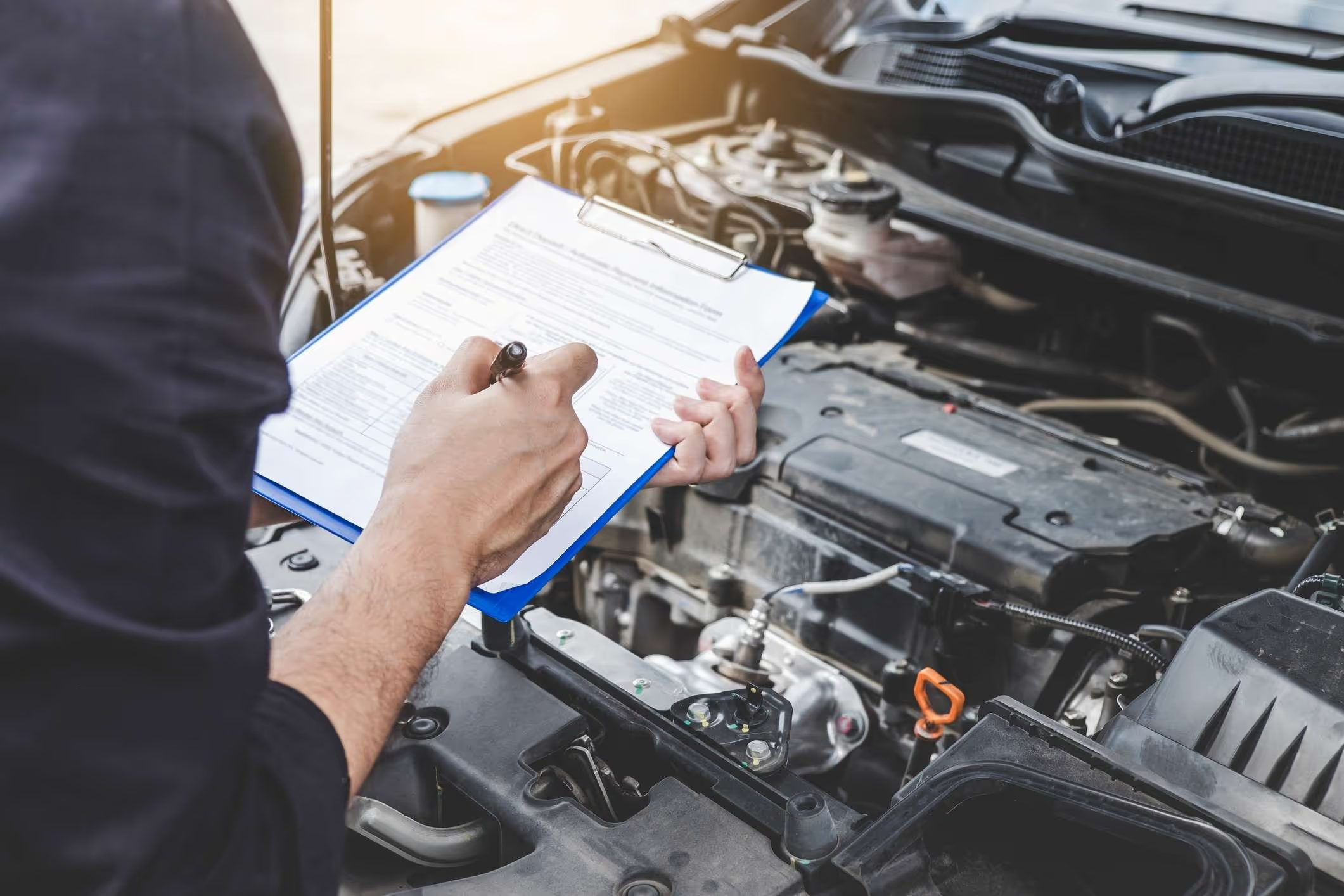
For decades, non-commercial vehicles registered in Texas were required to pass annual safety inspections. These inspections checked critical components such as brakes, tires, steering systems, lights, and other safety features designed to reduce the risk of preventable crashes.
That system changed on January 1, 2025.
House Bill 3297, passed by the 88th Texas Legislature and signed into law by Governor Greg Abbott in 2023, eliminated the Vehicle Safety Inspection Program for most non-commercial vehicles. As a result, the majority of Texas drivers are no longer required to bring their cars to an inspection station for a safety check before renewing registration.
Supporters of the bill argued that inspections created unnecessary inconvenience and expense, particularly for owners of newer vehicles. Critics warned that removing the requirement could allow unsafe vehicles to remain on the road longer.
What Changed Under Texas Motor Vehicle Inspection Laws
As of 2025, most non-commercial vehicles are no longer required to undergo a safety inspection prior to registration. This eliminated the annual inspection that previously evaluated a vehicle’s:
- Brake systems and parking brakes;
- Tires and wheels;
- Steering components;
- Headlights, taillights, brake lights, and turn signals;
- Horn;
- Mirrors;
- Windshield wipers;
- Seat belts;
- Window tint compliance; and
- Exhaust systems.
Although the inspection itself has been removed, drivers are still required to pay an inspection program replacement fee at the time of registration. For most vehicles, that fee is $7.50.
New vehicles purchased in the current or preceding model year that have not previously been registered must pay an initial fee of $16.75, which covers the first two years.
These fees replace funding previously used to support state programs and highway construction through inspection revenue.
What Hasn't Changed
Despite the elimination of most safety inspections, several important requirements remain in effect.
Emissions Testing Still Required in Certain Counties
Vehicles registered in 17 major metropolitan counties must still pass annual emissions testing. Those counties include:
Brazoria, Collin, Dallas, Denton, Ellis, El Paso, Fort Bend, Galveston, Harris, Johnson, Kaufman, Montgomery, Parker, Rockwall, Tarrant, Travis, and Williamson.
Bexar County is scheduled to join this list in 2026.
Commercial Vehicles Must Still Be Inspected
All commercial vehicles, regardless of location, must continue to pass vehicle safety inspections. These vehicles are exempt from the inspection program replacement fee, but must pay the inspection fee itself.
Drivers Are Still Responsible for Vehicle Safety
Even without annual inspections, Texas drivers are still legally responsible for maintaining safe vehicles. Operating a car with faulty brakes, bald tires, broken lights, or other dangerous defects can still violate traffic laws and create liability under Texas motor vehicle inspection laws and general safety regulations.
While these requirements remain in place, safety advocates argue that removing inspections increases the risk of unsafe vehicles slipping through the cracks.
The Safety Implications of Eliminating Inspections
For accident victims and roadway safety advocates, the removal of mandatory inspections raises serious concerns.
Vehicle defects are a well-documented factor in severe crashes. A 2024 study published in Heliyon found that brake defects accounted for approximately 42% of vehicle defects associated with collisions, followed by tire blowouts at 22.4%. The study also noted that roughly 67% of defective vehicles involved in crashes were more than ten years old.
The National Highway Traffic Safety Administration reports that approximately 11,000 tire-related crashes occur each year in the United States. Brake failures, steering malfunctions, and suspension issues can cause sudden loss of control, especially at highway speeds, regardless of the vehicle type.
Without annual inspections, critics worry that these problems may go unnoticed longer, increasing the likelihood of preventable accidents.
Negligent drivers who ignore basic vehicle maintenance put everyone on the road at risk. Pierce Skrabanek can help you pursue justice and fight for the compensation you deserve. Call (832) 690-7000 to discuss your case with a dedicated car accident attorney.
The Debate Over Inspection Effectiveness
The decision to eliminate safety inspections sparked heated debate among Texas lawmakers.
Opponents warned that removing inspections could increase risks for drivers in a state with consistently high traffic fatality rates.
In 2024 alone, 4,150 people were killed in Texas auto crashes—an average of one death every two hours statewide.
During legislative discussions, critics emphasized that inspections served as more than regulatory hurdles. They acted as routine reminders to address basic maintenance. Without that annual prompt, lawmakers expressed concern that drivers may delay brake service, tire replacement, or repairs to worn components.
Older vehicles were another concern. These vehicles are more prone to mechanical failure and often lack modern safety technology, yet they will no longer be subject to routine inspections.
Supporters of the bill countered that modern vehicles are built with advanced safety systems and improved reliability, reducing the need for yearly checks. They also pointed to cost savings and convenience for drivers.
What the Changes Mean for Accident Victims
Getting compensation after a car accident still depends on proving that another driver caused the crash. When a collision happens because a vehicle wasn’t properly maintained, the driver responsible for that vehicle can still be held accountable.
Before 2025, this process was more straightforward. Texas required annual safety inspections, and skipping one or driving a vehicle that couldn’t pass made it easier to show that a driver failed to meet basic safety standards.
Now that most vehicles are no longer inspected, that automatic proof is gone. Injured drivers must instead show that a specific defect existed, that the driver knew or should have known about it, and that the defect contributed to the crash.
The Texas car inspection law changes don’t prevent injured people from seeking compensation, but they do affect what evidence matters most when vehicle maintenance is involved.
Frequently Asked Questions About the Car Inspection Law in Texas
Does the Texas Car Inspection Law Apply to All Vehicles?
No. The elimination of safety inspections applies only to most non-commercial vehicles. Commercial vehicles must still pass inspections statewide, and emissions testing remains mandatory in certain counties.
Can a Driver Still Be Held Responsible If Their Vehicle Had Mechanical Problems?
Yes. Even without inspections, drivers are still responsible for maintaining safe vehicles. Operating a car with defective brakes, tires, or lights can still support a negligence claim under current Texas vehicle inspection laws and traffic safety standards.
What Kinds of Defects Commonly Cause Serious Crashes?
Some of the most common maintenance-related causes of crashes include brake failures, tire blowouts, worn suspension components, steering issues, and malfunctioning lights. These defects can reduce stopping ability, stability, and visibility.
How Can I Prove a Vehicle Defect Caused My Accident Now?
Evidence may include police reports, photographs, repair records, witness statements, post-crash vehicle inspections, and expert analysis. In some cases, data from the vehicle itself can help identify mechanical problems.
Does the Elimination of Inspections Help Insurance Companies Deny Claims?
It can. Without inspection records, insurers may argue that a defect was unavoidable or unknown. This makes evidence collection and expert review more critical in cases involving maintenance failures.
Can Poor Vehicle Maintenance Affect More Than One Injured Party?
Mechanical problems such as brake failure, tire blowouts, or steering issues can trigger chain-reaction crashes involving multiple vehicles. When this happens, investigators may review maintenance records, repair histories, and prior warning signs to determine how the failure occurred and who bears responsibility.
In situations involving company vehicles or cars loaned to others, liability may extend to vehicle owners who failed to address known safety issues.
Should I Speak With a Lawyer If I Suspect Poor Vehicle Maintenance Caused My Crash?
Yes. Cases involving mechanical defects require prompt action to preserve evidence and identify liability. An attorney can evaluate whether maintenance failures played a role and explain your options under current Texas vehicle inspection laws.
Pierce Skrabanek Fights for Accident Victims
Changes to inspection requirements make accident cases more complex, especially when mechanical failure or poor maintenance is involved. Injured drivers still deserve accountability.
At Pierce Skrabanek, we represent accident victims across Texas in cases involving vehicle defects, maintenance failures, and driver negligence. Our attorneys know how to identify mechanical problems, secure key evidence before it’s lost, and work with qualified experts such as mechanical engineers and accident reconstructionists to determine how a crash occurred.
We handle serious injury cases involving traumatic brain injuries, spinal cord damage, fractures, permanent disabilities, lost income, rising medical bills, and wrongful death claims. Our focus is on holding negligent drivers accountable and pursuing compensation that reflects the full impact of your injuries.
Schedule a Free Consultation
If you were injured in a car accident involving vehicle defects or poor maintenance, experienced legal representation matters. Insurance companies may challenge fault more aggressively following changes to car inspection law in Texas.
Pierce Skrabanek offers free, no-obligation consultations. We’ll review the facts of your accident, explain your legal rights, and discuss your options. The removal of mandatory inspections does not excuse negligence or prevent injured drivers from pursuing compensation.
Contact us at (832) 690-7000 today to speak with a Texas car accident attorney ready to fight for you.
Proudly Representing Texas Residents

Pierce Skrabanek Fights for Results
We fight for the legal rights of clients nationwide in a broad range of areas, including maritime, industrial, and car or trucking accidents.
All Practice Areas