Understanding the Causes of Car Accidents
We are dedicated to helping those who have been injured or affected by a catastrophic injury. You may contact us 24/7 at (832) 690-7000 for a free, confidential consultation or to schedule an appointment with us.
Click for a Free Consultation


When you are injured in a car accident, figuring out what caused the crash is an important part of determining who was responsible. Distracted driving, speeding, drunk driving, fatigue, unsafe lane changes, and failure to yield are responsible for many collisions. Defective vehicle parts and dangerous road conditions can also contribute.
The causes of car accidents can also tell us where to look for answers. Phone records can show whether a driver was texting. Video can capture a red-light violation or unsafe turn. Vehicle data can provide information about speed and braking, while maintenance records can uncover problems with a vehicle or its parts.
Pierce Skrabanek investigates serious car accidents to determine how they happened and identify those responsible. Our attorneys have more than 30 years of combined experience representing people whose lives have been changed by serious injuries.
If you or someone you love was injured in a car accident, call Pierce Skrabanek at (832) 690-7000 for a free case evaluation.
"We take every case seriously because behind every crash is a real person whose life was changed. We're here to help make things right."

What Are the Common Causes of Car Accidents?
Most collisions trace back to something a driver did or failed to do behind the wheel. Sometimes several factors contribute to the same crash.
Distracted Driving
Cell phones are one of the most recognizable sources of distraction, but anything that takes a driver's attention away from driving creates a risk.
Distractions behind the wheel range from:
- Reading or sending texts
- Making phone calls
- Using navigation
- Eating or drinking
- Reaching for objects
- Adjusting music or vehicle controls
- Talking to passengers
- Turning toward children or other passengers
- Looking at something happening outside the vehicle
Texting takes a driver's attention away from traffic and often requires looking away from the road and taking a hand off the wheel. In 2024, 3,208 people were killed in crashes involving distracted drivers.
Phone records, witness accounts, video, and vehicle data can help establish what the driver was doing before impact.
Speeding
The faster a vehicle is moving, the farther it travels before the driver reacts and the more distance it needs to stop. Speed can also increase the force of impact and the severity of injuries.
Drivers create additional risk when they:
- Exceed the posted speed limit
- Drive too fast in rain or fog
- Fail to slow down in heavy traffic
- Enter curves at unsafe speeds
- Speed through construction zones
- Approach stopped traffic too quickly
Speeding contributed to 29% of U.S. traffic fatalities in 2024. NHTSA also warns that drivers can travel too fast for road conditions even when they are within the posted limit.
Drunk and Drug-Impaired Driving
Alcohol and drugs interfere with judgment, coordination, reaction time, vision, and vehicle control.
Impairment can involve alcohol, illegal drugs, prescription medications, or multiple substances. Police reports, body-camera footage, chemical test results, receipts, surveillance footage, and witness accounts can help establish whether a driver was impaired.
A criminal DWI prosecution is separate from a civil car accident case. Someone injured by an impaired driver can pursue a civil claim without waiting for the criminal case to conclude.
Fatigued and Drowsy Driving
A tired driver can have trouble concentrating, reacting quickly, making decisions, and staying in a lane. In 2024, 644 people died in drowsy-driving crashes, according to NHTSA.
Fatigue is often associated with:
- Driving overnight or early in the morning
- Long road trips
- Extended work shifts
- Driving for hours without a break
- Lack of sleep
- Medication that causes drowsiness
Work schedules, travel history, electronic records, and driving logs can provide information about how long someone had been working, traveling, or behind the wheel.
Following Too Closely
Drivers need enough space to respond when traffic ahead suddenly slows or stops. Tailgating reduces that reaction time and is a frequent factor in rear-end crashes.
After a collision, investigators can look at:
- Damage to both vehicles
- Skid or tire marks
- Dashcam footage
- Witness accounts
- Vehicle event data
- Traffic conditions
Following distance becomes even more important at higher speeds or when roads are wet and stopping takes longer.
Failure to Yield
Drivers are required to yield the right of way in numerous traffic situations. Violations frequently result in intersection and side-impact collisions.
Examples include:
- Turning left across approaching traffic
- Pulling from a driveway into traffic
- Entering an intersection without yielding
- Failing to yield while merging
- Entering a roundabout without yielding
- Failing to yield to pedestrians in a crosswalk
When drivers disagree about who had the right of way, traffic cameras, nearby surveillance footage, witnesses, vehicle positions, and damage patterns can help establish how the collision occurred.
Unsafe Lane Changes and Turns
Drivers need to check surrounding traffic before changing lanes, merging, or turning across another vehicle's path.
Common mistakes are:
- Failing to check a blind spot
- Moving across several lanes at once
- Turning from the wrong lane
- Failing to signal
- Merging into an occupied lane
- Turning left without enough room between approaching vehicles
Damage patterns can show where the vehicles were positioned at impact. Video and witness accounts can provide more information about their movements before the collision.
Running Red Lights and Stop Signs
Intersection crashes frequently come down to a disagreement over who had the right of way. Information used to resolve those disputes can come from:
- Traffic cameras
- Surveillance cameras at nearby businesses or homes
- Dashcams
- Independent witnesses
- Traffic-signal timing records
- Vehicle event data
These sources become valuable when the drivers give conflicting accounts or no independent witness stayed at the scene.
Reckless and Aggressive Driving
Aggressive driving can involve several dangerous behaviors during the same trip.
Drivers put others at risk by:
- Excessively speeding
- Tailgating
- Weaving through traffic
- Passing unsafely
- Racing
- Cutting off other vehicles
- Ignoring traffic signals
- Making abrupt lane changes
Video, witness accounts, and vehicle information can help establish the driver's conduct before the collision.
Wrong-Way Driving
Wrong-way crashes frequently result in severe head-on collisions because the vehicles are traveling toward each other.
Alcohol or drug impairment, distraction, confusion at an entrance or exit ramp, and problems with road design or signage can contribute to these crashes. Finding out how the vehicle entered the wrong side of the road can also identify problems beyond the driver's conduct.
Inexperienced Drivers
New drivers have had less time to develop skills such as judging speed and distance, navigating heavy traffic, recognizing hazards, and responding when road conditions change.
Common problems involving inexperienced drivers are:
- Following too closely
- Misjudging gaps in traffic
- Unsafe turns
- Failure to yield
- Distraction
- Driving too fast for conditions
Inexperience does not excuse negligent driving. New drivers have the same responsibility to follow traffic laws and operate their vehicles safely.
Bad Weather and Poor Visibility
Rain, fog, high winds, standing water, and limited visibility require drivers to change how they operate their vehicles.
Safer driving in poor conditions often requires:
- Reducing speed
- Increasing following distance
- Using headlights
- Avoiding sudden braking or turns
- Allowing additional stopping distance
Weather can contribute to a collision, but drivers are still expected to respond appropriately to the conditions around them.
The common causes of car accidents also overlap. A driver could be speeding while texting, following too closely during heavy rain, or making an unsafe turn after drinking. Looking at all of the contributing factors provides a more complete account of how the collision happened.
What if Driver Error Wasn't the Only Problem?
A defective vehicle, negligent repair, dangerous roadway, or malfunctioning traffic control can contribute to a crash even when another driver's actions are also involved.
Defective Vehicles and Auto Parts
Vehicles contain thousands of components, and the failure of a safety-critical part can cause a driver to lose control or prevent a vehicle from responding as expected.
Problems can involve:
- Brakes
- Tires
- Steering systems
- Accelerators
- Airbags
- Seat belts
- Electronic safety systems
For example, a tire blowout could cause a loss of control at highway speed. Improperly installed brakes could prevent a vehicle from stopping when traffic ahead slows.
When a mechanical problem is suspected, the vehicle should be preserved so the failed component can be inspected. Repair history, maintenance records, recalls, and information about the component can help determine whether responsibility extends to a manufacturer, repair shop, parts company, or another business.
Dangerous Roads and Traffic Controls
The condition or design of a roadway can also contribute to a collision. Problems can involve:
- Malfunctioning traffic signals
- Missing or inadequate signs
- Poor street lighting
- Dangerous intersection design
- Potholes or damaged pavement
- Construction hazards
- Obstructed sight lines
- Debris in travel lanes
A dangerous road or malfunctioning traffic signal can raise questions about whether a city, county, state agency, contractor, or another entity was responsible for the condition. Claims involving government entities have special notice and filing requirements, and some deadlines can be much shorter than the deadline for filing a car accident lawsuit against another driver.
How Do You Prove What Caused a Car Accident?
Even when one factor is identified as a leading cause of car accidents, proving what happened in a specific crash requires information tied to the drivers, vehicles, and scene.
Different crashes call for different types of investigation:
- Texting or phone use: Phone records, video, witnesses, and the driver's statements can establish distraction.
- Speeding: Vehicle data, video, skid marks, damage patterns, and accident reconstruction can help determine speed.
- Drunk driving: Chemical tests, police records, body-camera footage, receipts, and witnesses can provide information about alcohol or drug use.
- Drowsy driving: Work schedules, travel history, electronic records, and driving logs can show how long someone had been awake or driving.
- Vehicle failure: The vehicle or failed component can be inspected along with maintenance records, repair history, and recalls.
- Dangerous roadway: Photos, maintenance records, traffic studies, prior crash records, and design documents can identify problems with the road.
A crash can have more than one cause. A driver could be speeding while looking at a phone, or a tire could fail on a vehicle that had not been properly maintained. Identifying each contributing factor helps determine who was responsible and whether the claim involves more than one driver, company, or other party.
Not Sure Why the Crash Happened?
You do not need to figure that out before contacting an attorney. Pierce Skrabanek can investigate how the collision occurred, identify who was responsible, and handle the insurance company while you focus on recovering from your injuries.
Call (832) 690-7000 or contact us online for a free case evaluation.
Should You Give the Other Driver's Insurance Company a Recorded Statement?
The other driver's insurance adjuster might contact you soon after the crash and ask to record a conversation about what happened. You do not need to agree simply because the adjuster asks.
During a recorded statement, the adjuster could ask about:
- Your speed before the crash
- When you first saw the other vehicle
- Where you were looking
- Whether you tried to avoid the collision
- What you said at the scene
- Your injuries and symptoms
- Previous injuries or medical treatment
There are good reasons to speak with an attorney before answering those questions. Soon after an accident, you might not have the police report or know everything that contributed to the collision. You could also still be undergoing medical evaluation, which makes it difficult to give a complete account of your injuries.
A recorded statement gives the insurance company answers it can revisit throughout the claim. If you are unsure about a detail, say you do not know rather than guessing. If you have not been medically cleared, avoid making broad statements about how badly you were injured or whether you have recovered.
You can tell the other driver's adjuster that you want to speak with an attorney before providing a recorded statement.
Your own insurance company is different because your policy requires cooperation with certain parts of its investigation. An attorney can review what your insurer is requesting and help you respond without violating your policy obligations.
How Pierce Skrabanek Investigates a Serious Car Accident
A police report gives the attorneys a starting point. It can identify drivers and witnesses, describe the vehicles, record citations, and document an officer's initial assessment of the scene.
A more detailed investigation can involve:
- Photos and video from the crash scene
- Damage to each vehicle
- Dashcam and surveillance footage
- Witness interviews
- Cell phone records
- Vehicle event data
- Traffic-signal records
- Road and weather conditions
- Maintenance and repair history
- Police and emergency records
- Inspection of a suspected defective component
- Accident reconstruction when necessary
Starting the investigation soon after a serious crash gives the attorneys time to request surveillance footage before it is overwritten, inspect vehicles before repairs are completed, photograph roadway conditions, and locate witnesses while the accident is still fresh in their minds.
Pierce Skrabanek has handled automobile cases where responsibility was contested. Paul Skrabanek and Michael Pierce secured a $639,000 jury verdict for an injured motorist after the defendant disputed fault. Following a week-long trial, the jury returned a unanimous verdict. In another automobile accident case, Michael Pierce obtained a $600,000 judgment that was upheld on appeal.
Why Choose Pierce Skrabanek After a Serious Car Accident?
Pierce Skrabanek has represented injured clients for decades, including motorists whose cases went to trial because responsibility was disputed.
When you hire Pierce Skrabanek, you have a team with:
- Over 30 years of combined legal experience
- More than $500 million recovered for our clients
- Extensive courtroom experience, including 35+ state and federal trials with Michael Pierce serving as trial counsel
- No upfront legal costs. You pay attorney fees only if we recover compensation for you.
A Martindale-Nolo Research survey found that more than nine out of 10 personal injury claimants who hired an attorney received a settlement or award, compared with about half of those who handled their claims without one.
For Genesis H., working with Pierce Skrabanek meant having help with the insurance company, car repairs, and court process while receiving updates throughout her case:
“I was referred to Pierce Skrabanek Law Firm and from day one, I knew I was in good hands. They were clear, honest, and constantly kept me updated on every step, from insurance and car repairs to the court process. What stood out most was how much they genuinely cared. I never felt like just another case. They were professional, empathetic, and truly went above and beyond. I’d recommend them to anyone dealing with a car accident. They actually care and that makes all the difference.”
— Genesis H.
You should know what is happening with your case and be able to reach the people handling it. Pierce Skrabanek keeps clients informed, answers their questions, and prepares each case based on what happened in that individual crash.
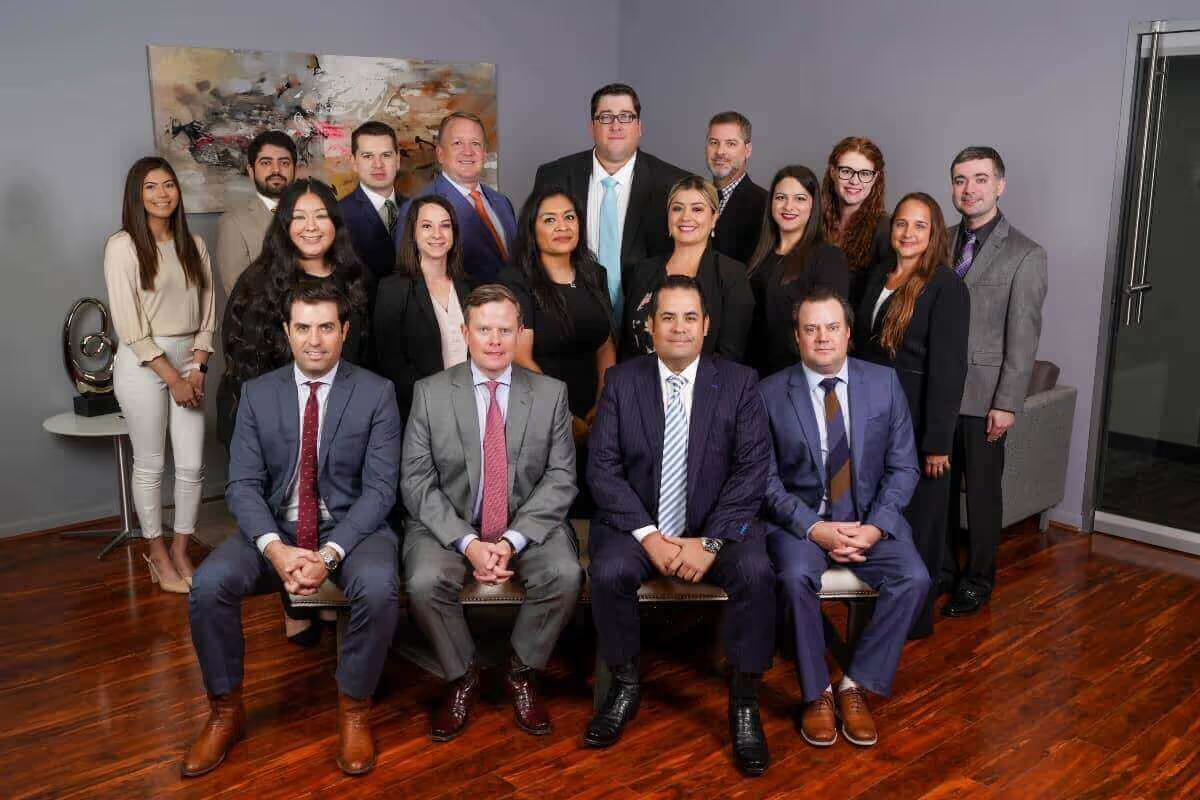
Pierce Skrabanek Fights for Results
We fight for the legal rights of clients nationwide in a broad range of areas:
Our Testimonials

“Every person I came in communication with was a great person. This law firm treats you as family and will do anything to get the best for you.”
Andres T.
“Mr. Skrabanek and his team are all very diligent, thorough, and hard-working. For my first time ever needing a lawyer, I had a great experience. They walked me through the process and answered all of my questions along the way and in a timely manner. I greatly appreciate all of their help!”
Tori P.
“They took care of me from start to finish! I’m very pleased with my results. I will 100% recommend it to my friend's family or just another person who needs good help in a bad situation. Thank you to Paul and the whole team!”
Jon J.
Get Free Consultation
Fill Out Our Form For Your Free Consultation
Talk to Pierce Skrabanek About Your Car Accident
You might know what caused your accident because you saw the other driver run a red light, cross into your lane, or hit you from behind. Other car accident causes require a closer investigation of what happened before impact.
Pierce Skrabanek can obtain and review information that helps answer those questions, deal with the insurance companies, and pursue compensation from those responsible for your injuries.
Call us at (832) 690-7000 or contact us online for a free case evaluation.
What Our Clients Are Saying About Us
Frequently Asked Questions
FAQs About Car Accident Causes
What if the Police Report Says I Caused the Accident?
A police report is important, but the officer's conclusion does not necessarily settle fault in a civil case. An officer who arrived after the collision usually did not see it happen.
Dashcam footage, surveillance video, witnesses, vehicle data, photographs, and the location of the damage could provide information that was unavailable when the report was written.
If you believe the report is wrong, keep your photos, videos, witness information, and other records from the crash.
What Happens if the Driver Who Hit Me Was Working at the Time?
The driver's employer could also be responsible when an employee causes a collision while performing job duties.
An attorney can look at:
- Who owned the vehicle
- Why the driver was on the road
- Where the driver was going
- The driver's work schedule
- Employment and training records
- Company driving policies
Commercial driving cases can also raise questions about hiring, supervision, maintenance, and whether the company allowed an unsafe driver to remain behind the wheel.
Can Video From a Business Near the Crash Be Used?
Yes. Security cameras at stores, restaurants, gas stations, homes, parking lots, and other properties sometimes capture the collision or the vehicles immediately before impact.
Those recordings can disappear quickly because many systems automatically overwrite older footage. If you noticed cameras near the scene, write down where they were and tell your attorney as soon as possible.
What if Someone Caused the Crash Without Hitting My Car?
Physical contact is not required for another driver's actions to contribute to a collision.
A driver could force another vehicle from its lane, pull into traffic and cause someone else to swerve, or create a hazard that results in a multi-vehicle crash without their own vehicle being struck.
Identifying that driver becomes important if they left the scene. Witnesses, dashcam footage, surveillance video, photographs, and police records can help determine who was involved.
We’re Here for You:
Real Results for Real Challenges
We know how tough things can get after an injury. That’s why we make your struggles our fight. With over three decades of combined experience, we’ve been the reliable allies our clients need, tackling financial hardships, physical pain, and major life changes. Our track record of successful verdicts and settlements speaks to our team’s passion and dedication to helping clients get the support and justice they need.
$2 Million Settlement for Automobile Accident Victim
Summary: Served as second chair trial attorney on plaintiff’s case concerning injuries suffered in an automobile accident. Plaintiff obtained a total judgment in the amount of $2 million, which was approximately five times defendant’s highest pretrial settlement offer.
$117 Million Jury Verdict for an Ambulance Accident Case
Summary: Mike Pierce was one of the lead lawyers responsible for obtaining a $117 million recovery for a catastrophic injury to a twenty-one-year-old mother of two. The suit involved a serious car accident that occurred while an Acadian Ambulance driver was transporting the plaintiff to the hospital.


